
 According to an article in the January 7, 2007 edition of the British newspaper The Sunday Times (read article), Israeli military officers have developed plans to attack Iranian nuclear research and development facilities using tactical nuclear weapons.
Reportedly, the Israelis will attack three targets in Iran that comprise the critical elements of the nuclear program, setting back the weapons effort for years. The three targets are the uranium enrichment facility at Natanz, the uranium conversion facility at Esfahan, and the heavy water reactor at Arak. The fact that two of the three targets are involved in uranium processing and the other in plutonium production, indicates that Iran is pursuing at least two different avenues to obtain fissile material suitable for use in thermonuclear weapons.
When I was in Israel a few months ago, senior Israeli officials told me that they believe the next year would be critical in stopping the Iranian program, because they believe that in two years the Iranians will have produced enough fissile material - probably enriched uranium, but possibly plutonium as well - to build nuclear weapons (see my earlier article, Iran - The "Existential Threat" to the State of Israel).
If the Israelis believe that international diplomacy will not succeed in deterring the Iranians from attempting to develop a nuclear weapon, it is reasonble to assume that they will take military action. They have limited capability to do so with a high probability of success, but if they truly believe - and I think they do - that the very existence of their country is at stake, they will try. Their best and only realistic option is an air strike.
According to the article, the strike planning involves the use of tactical nuclear weapons, each with about a one kiloton yield (the Hiroshima bomb was about 15 kilotons). In my opinion, a one kiloton device may technically be a "tactical" nuclear weapon, but in the world of political reality, there is no such thing. Any use of a nuclear weapon, the first since the United States dropped two atomic bombs on Japan in 1945, will draw international condemnation and brand Israel as a pariah nation. Add to this the U.S. sanctions required by law once a country cannot be certified as nuclear weapons free. Israel has skirted the nuclear issue for years with its policy of "nuclear ambiguity" - use of a tactical nuclear weapon in Iran removes that ambiguity (see my earlier article, Israel's Nuclear Weapons).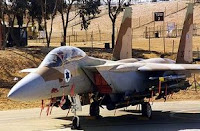
Israeli pilots have reportedly flown training flights over the Mediterranean as far as Gibraltar in recent weeks to train for the 2,000-mile round trip to potential Iranian targets. All well and good, but flying over the Mediterranean is not flying that same distance through hostile airspace. My previous assessment of Israel's air strike options is still valid (see Iran - Israel's Air Strike Options).
One should also consider that this information may have been intentionally leaked or planted as part of an information operations campaign to influence Iranian thinking, or to stiffen European and American resolve to deal with this issue diplomatically. Thus far, Tehran is not listening.
The bottom line here: Use of tactical nuclear weapons is an absolute last resort. Doing so removes any doubt about Israel's nuclear arsenal, invites sanctions and runs the risk of igniting a regional war. On the other hand, doing nothing puts the existence of the state of Israel at risk. When faced with possible extinction, the Israelis may well opt to go nuclear.
January 7, 2007
Analysis - Israeli plans for attack on Iranian nuclear facilities


January 2, 2007
The coming battle with the Al-Sadr militia
 In the aftermath of the execution of former Iraqi dictator Saddam Husayn in what appears to be almost a Shi'a lynching, it is becoming apparent that there is a looming showdown with the jaysh al-mahdi (Al-Mahdi Army), the Shi'a militia of radical cleric Muqtada Al-Sadr.
The degree of Al-Sadr's influence was clear as the cell phone video of Saddam's execution hit the internet. The cries of "Muhammad and 'Ali," "Long live Muhammad Baqr Al-Sadr*," and "Muqtada, Muqtada, Muqtada" all indicate that the majority of witnesses were Shi'a.
Will the coming showdown be with the Iraqi government and its nascent security forces, or will it require the commitment of American troops?
That depends on the government of Prime Minister Nuri Al-Maliki and his willingness (or capability) to confront Muqtada Al-Sadr. In the past, American attempts to control the operations of the Mahdi Army have been resisted or stymied by Al-Maliki. That has to end.
If Al-Maliki refuses to order his forces to engage the militia, he must realize that American troops will. How much longer are we going to put up with his recalcitrance?
No longer can we countenance the existence of Shi'a death squads, most of which are believed to be made up of members of the Mahdi Army. Other death squad participants likely come from the very Iraqi security forces that are supposed to confront these militias and protect the populace, be they Sunni, Shi'a or Kurd.
If there is to be calm in Baghdad, the first step is to abolish the Mahdi Army. The second step is to neutralize Muqtada Al-Sadr - by any means necessary. Only then can the sectarian violence abate and the Sunnis begin to trust the Shi'a-dominated government. It will be difficult in the wake of the Saddam execution video.
____________
* The late Muhammad Baqr Al-Sadr was the father-in-law of Muqtada Al-Sadr. He was executed in 1980 by the Saddam regime.
Iraq and 9/11 Deaths - Faulty Analogies
 A recent political cartoon (left) highlights the fact that the number of combat deaths in Iraq has now exceeded the number of people killed in the terrorist attacks of September 11, 2001.
Interesting statistic, but irrelevant. Not only is the statistic irrelevant, the use of the twin towers graphic/bar graph is insulting to the memories of those who died at the Pentagon and Shanksville.
Why is this analogy irrelevant?
Several reasons. Comparing the event that takes you to war with the casualties incurred in that war is ludicrous. I am sure that more Americans died at Antietam that did at Fort Sumpter. More Americans were killed by the time U.S. Marines had taken Guadalcanal than were killed at Pearl Harbor. World War One was ignited with the death of one member of the Austrian monarchy. The potential casualties are an important factor when determining strategy and tactics, but not in the decision on whether or not to act in defense of what are perceived as the national interest
Another line of reasoning probably lost on those trying to make this faulty analogy. Many Americans - and I dare say including those who are trumpeting this statistic - believe that Iraq had nothing to with the events of September 11, 2001. If that is the case (and I believe that it is), there should be no comparison of the deaths in the two unrelated events. You can't have it both ways.
Bottom line: We all mourn the loss of our young men and women in both Iraq and Afghanistan. We continue to mourn the loss of our fellow citizens and friends on September 11, 2001. Don't insult their memories with cheap shots like this.
January 1, 2007
Iraq: Halabjah Revisted

With the recent execution of Saddam Husayn, there are writings all over the media about our relationship with him, the death penalty, foreign policy, etc. Some are accurate, most are not. I have already commented on Robert Fisk's article (Robert Fisk - again) in the British Paper The Independent.
For example, there is an editorial today by New York Times writer William Rivers Pitt titled Hussein the Rabbit, that perpetuates some incorrect information on Iraqi use of chemical weapons on the the Kurdish village of Halabjah. He even mentions me in the article, but that's not germane to the point here.
First, anyone who refers to Saddam Husayn as Husayn knows little of Arabic names. Husayn is Saddam's father's name. His name is correctly stated as Saddam Husayn Hasan al-Majid. Saddam is his given name, Husayn is his father, Hasan is his grandfather, and al-Majid is the family name.
Now for what happened in Halabjah in 1988. Here is what Pitt writes in his editorial:
-------------------------------------
Some important and uncomfortable truths died with Hussein Saturday morning. The refrain of "Saddam gassed the Kurds in Halabja" has been with us for years, standing unchallenged in any mainstream political conversation. Yet Stephen C. Pelletiere, in a January 2003 New York Times article titled "A War Crime or an Act of War," revealed some information that cuts against this grain.
Pelletiere was the CIA's senior political analyst on Iraq during the Iran-Iraq war, and served as a professor at the Army War College from 1988 to 2000. He also headed a 1991 Army investigation into how the United States would fare in a war against Iraq, and the classified report created from this investigation contained voluminous details of the Halabja attack.
"Immediately after the battle," wrote Pelletiere, "the United States Defense Intelligence Agency investigated and produced a classified report, which it circulated within the intelligence community on a need-to-know basis. That study asserted that it was Iranian gas that killed the Kurds, not Iraqi gas. The agency did find that each side used gas against the other in the battle around Halabja. The condition of the dead Kurds' bodies, however, indicated they had been killed with a blood agent - that is, a cyanide-based gas - which Iran was known to use. The Iraqis, who are thought to have used mustard gas in the battle, are not known to have possessed blood agents at the time."
No one can deny that Saddam Hussein had many murders to his name, and yet the facts revealed in this classified report give pause. We have here an example of political expediency in the American style, where facts are ignored because they ruffle the story line and derail the rationalizations that sustain us. When the slogan on the battle standard is a lie, those who rally to it become victims of a fraud.
-------------------------------------
I know Steve Pelletiere, and am intimately familiar with his analysis and report. I was in Baghdad when the incident took place. He is correct that in 1988 we believed that Iran was primarily responsible for the chemical attack on the Kurds in Halabjah. However, that analysis was later proven wrong as additional information came to light.
In 1995, one of the Iraqi pilots who had participated in the attack defected to the Kurds in northern Iraq. I was among those serving in northern Iraq and talked to the pilot. He confirmed that it was Iraqis who had perpetrated the attacks. It was about this same time that Khidhir Hamza, a physicist involved in the Iraqi nuclear program defected as well. According to Hamza, the attack on Halabjah was a weapons test to determine if Iraqi chemists had perfected development of the nerve agent. A month later, after the successful "test" at Halabjah, the Iraqis used the agent in their attack on the Al-Faw peninsula.
Halabjah was an attack by Saddam Husayn's Iraq on its own citizens. Let's not rewrite history.
Robert Fisk - again
 The British newspaper The Independent published an article by Robert Fisk about the execution of Saddam Husayn - He takes his secrets to the grave. Our complicity dies with him.
Earlier this year, Fisk reported on what I allegedly reported to Washington after touring the battlefields on the Al-Faw peninsula shortly after Iraqi forces had retaken them from Iranian troops. In that piece, he got it wrong - read my response to that earlier article.
This current article is slightly more accurate when he talks about me. Perhaps my letters to his editor had some effect. Here's what he says this time:
Nor was the Pentagon unaware of the extent of Iraqi use of chemical weapons. In 1988, for example, Saddam gave his personal permission for Lt Col Rick Francona, a US defence intelligence officer - one of 60 American officers who were secretly providing members of the Iraqi general staff with detailed information on Iranian deployments, tactical planning and bomb damage assessments - to visit the Fao peninsula after Iraqi forces had recaptured the town from the Iranians. He reported back to Washington that the Iraqis had used chemical weapons to achieve their victory. The senior defence intelligence officer at the time, Col Walter Lang, later said that the use of gas on the battlefield by the Iraqis "was not a matter of deep strategic concern".
This paragraph is fairly accurate except for the number of people involved. If you counted everyone in Washington that had any part in it (analysts, imagery interpreters, line drawing artists, etc), you may get as high as 30, but there were only two full time - Pat Lang and I, and only two ever present in Iraq at any given time.
Other than that, the story is a mish-mash of fact and fiction. I'll address a few (not all) of the more glaring fictional parts. I will do so from an American perspective as I was not privy to British support for Saddam.
Our first relationship with Saddam Husayn began in 1984 with the normalization of diplomatic relations between Iraq and the United States (broken since 1967). Almost immediately, the CIA tried a relationship with the Iraqi Intelligence Service (al-mukhabarat). We were willing to provide low-level tactical information on the Iranian troop deployments in return for information on American hostages being held in Lebanon by Iranian Islamic Revolutionary Guard Corps members or their surrogates. It didn't go anywhere.
I discount Fisk's claims that we provided information on ICP members. I also don't believe the report of meetings between Saddam and US officers prior to the 1980 invasion of Iran. We certainly would not have used a German arms dealer to pass satellite imagery to Baghdad - we would never have released that to such a person. Besides, that was my job!
We pretty much had nothing to do with the Iraqis (Ollie North was too busy with the Iranians) until 1987 when the USS Stark was inadvertently struck by a Iraqi Exocet missiles. Meetings held with the Iraqis in the aftermath of this incident grew into a relationship between the U.S. Defense Intelligence Agency and the Iraqi Directorate of Military Intelligence. In late 1987, DIA prepared an assessment which concluded that Iran would defeat Iraq in spring of 1988.
In February 1988, Reagan ordered Secretary of Defense Frank Carlucci to begin providing intelligence to the DMI. That continued through September 1988. As far as I know (and I was in a position to know), we only provided information.
No weapons were ever transferred. As for the chemicals and biological stuff, they bought those on the open market - there was no restriction on them. We did not provide any assistance for his chemical or biological weapons production facilities.
As for the agricultural credits, we did that, but I had nothing to do with that, so I will defer to someone who knows. We did sell thousands of white Oldsmobile Cutlasses as death gratuities for the families of officers killed in action. Enlisted families were given red Brazilian-made VW Passats.
We did support Saddam Husayn - no question. It was in keeping with the Middle East saying, "The enemy of my enemy is my friend." It was about Iran and the ayatollahs, not about Iraq and Saddam Husayn. Unlike the mujahidin in Afghanistan who thought our support was about them rather than about the Soviets, the Iraqis understood. As soon as they won the war, they kicked me out.
(Note: I have described these events in extensive details in my book "Ally to Adversary: An Eyewitness Account of Iraq's Fall from Grace, Naval Institute Press, 1999).
December 31, 2006
The Burial of Saddam Husayn
(This is the final version)Following his execution on December 30, the remains of Saddam Husayn were turned over to the shaykh of the Albu Nasir tribe. The shaykh was moved by American military aircraft from Tikrit to Baghdad where he took custody of the body for return to Saddam's family burial plot in 'Awja, the village of his birth located about eight miles east of the city of Tikrit.
A funeral service was be held at the burial site on the morning of December 31. Following that, Saddam will be laid to rest about two miles from the graves of his two sons, 'Uday and Qusay, killed by U.S. forces in a gun battle in Mosul in July 2003. The location of the sons' graves are well-known, but are not marked. To ensure that no memorials are erected by supporters, or that the bodies are not desecrated by others, the area is patrolled regularly by American troops.
The movement of Saddam's remains to 'Awja are in direct contradiction of the wishes of Saddam's eldest daughter, Raghda (age 39). She wanted the remains moved to Yemen for temporary burial until Iraq is "liberated." After she realized that was not going to be permitted, the family, acting in accordance with Saddam's last will and testament, asked that he be buried in Ar-Ramadi, a town known for its high level of insurgent activity. According to the family, Saddam had indicated that he wanted to be buried in 'Awja or Ar-Ramadi.
Why was Saddam's tribal shaykh moved by the U.S. military, why was Saddam afforded a funeral, and why were his daughter's wishes ignored?  I suspect that prior to the signing of the execution warrant (see photo), a deal was struck between Prime Minister Al-Maliki and senior Sunni political leaders (possibly Vice President Tariq al-Hashimi, regarded as a moderate) that a funeral would be permitted and the remains would be transported to 'Awja for burial. This is unlike the treatment afforded the remains of Al-Qa'idah in Iraq leader Abu Mus'ab Az-Zarqawi who is buried in an unmarked grave in an undisclosed location.
A deal such as this might have been an attempt to assuage the anger and humiliation of Sunni politicians, many of whom regard the entire trial, sentencing and appeal process as rigged by the Americans and rushed to execution by the Shi'a-dominated government.
On a trivia note, the flag used to cover the coffin is the Saddam era flag. The green script between the three stars are the Arabic words allahu akbar (God is great). The two words were added by Saddam following his invasion of Kuwait in 1990 after he realized that he was facing a multinational military force intent on removing his forces from Kuwait. The addition of the Islamic phrase was an attempt to wrap his regime and actions in the mantle of Islam. On the original "Saddam flag," the words appear in script said to be Saddam's handwriting. The current Iraqi flag retains the phrase, but in a different font.
December 30, 2006
After Saddam’s execution, outlook for Iraq grim

This analysis appears on MSNBC.com, and is an update of an earlier piece I wrote (The coming month in Iraq).
After Saddam’s execution, outlook for Iraq grim
If Bush sends additional troops, their mission must be clearly spelled out
ANALYSIS
By Lt. Col. Rick Francona
Military analyst
MSNBC
Updated: 10:10 p.m. ET Dec 29, 2006
(Read the article on the MSNBC.com site)
December 29, 2006
A personal note on the execution of Saddam Husayn
I wrote this piece for the MSNBC Hardball "Hardblogger." It was teased on the NBC Nightly News blog:


Saddam Hussein’s rule affected virtually everyone in Iraq. Everyone has a story.
Here’s mine:
In 1995 and 1996, I was involved in the CIA’s covert operations to overthrow Saddam Hussein, operating from several Middle East countries bordering Iraq, as well as inside the Kurdish-controlled area of Iraq itself. One of these operations was to support of the Iraq National Accord (INA) under Dr. Iyad Alawi. One of Alawi’s key colleagues was a retired Iraqi military officer, General Muhammad Abdullah Al-Shahwani. Al-Shawani had relocated outside Iraq, but his three sons were serving in the Iraqi Army Republican Guard.
General Al-Shahwani was in contact with his sons and others in the Iraqi military; together they planned a coup to overthrow Saddam Hussein. By mid-1996, we believed that a coup had a chance of success. We began the infiltration of Iraqi agents we had recruited and trained to support the coup attempt.
Unfortunately, one of the agents was detected inside Iraq. Under severe interrogation, he revealed what information he knew and the whole operation was compromised. Iraqi security officials arrested virtually everyone involved in the coup attempt; most were executed.
As part of the team working directly with Al-Shahwani, I spent a lot of time at his home. I was with the general and his wife when word came that their three sons had been arrested. I was with them when one of their sons was allowed to make a phone call to his mother just prior to his execution.
I told Mrs. Al-Shahwani that someday Saddam would pay for his crimes. Finally, that day is here.
December 28, 2006
The coming month in Iraq
 The caption that accompanies the AP photo to the left reads, "Iraqi children pass by a vandalized mural of the former Iraqi dictator Saddam Husayn in Tikrit."
The word "vandalized" would indicate that the graffiti would be negative. However, the spray-painted Arabic actually reads, "Long live Saddam and the Ba'th (party)."
The graffiti underscores the divisions in the country - the upcoming execution of Saddam Husayn will only exacerbate the sectarian and ethnic violence taking place mostly in Baghdad. It also has the potential to unleash a wave of Sunni violence in the Sunni Triangle, in those cities now well known as hotbeds of insurgency - Ba'qubah, Ar-Ramadi, Al-Fallujah, Samarra', Tikrit, etc.
As Saddam faces execution - his death by hanging is mandated to take place within 30 days of the denial of his appeal, or no later than January 25, 2007 - many analysts (this one included) are concerned about the convergence of events that will occur next month.
In addition to the upcoming execution of Saddam Husayn, there is the ongoing deployment of the 82nd Airborne Division's 2nd Brigade from Fort Bragg to Kuwait to become the theater reserve for U.S. forces in Iraq. The previous theater reserve, the 15th Marine Expeditionary Unit, was deployed to the Al-Anbar province in November. The 2nd Brigade is the 82nd's "ready brigade," the brigade currently on standby duty for rapid deployment as needed. The initial battalion should be in place in 24 hours from deployment order. The fact that the ready brigade is being deployed indicates just how stretched the Army and Marines have become.
The deployment of the 2nd Brigade, totally about 3,500 troops, is probably the first of the expected increase in the number of U.S. forces in Iraq. In January, President Bush will unveil his plan for the "change of course" in Iraq. I believe that the decision has already been made that there will be an increase the number of troops, although the exact numbers may not be as high as five brigades (about 20,000 troops). It is interesting that the same generals who in the past claimed they did not need more troops, now do. I say that because the situation - the sectarian violence or civil war, depending on your perspective - has not significantly changed since the February 2006 bombing of the Al-Askari/'Abd Al-Hadi mosque in Samarra' that caused the escalation.
If there is going to be an increase in the number of troops, it is important that the President spell out exactly what their mission will be. Will they be dispatched to Al-Anbar or the Sunni Triangle to quell the Sunni insurgency (Ba'this and Al-Qaidah in Iraq, among others), or will they be sent to neutralize the Shi'a militia (especially the jaysh al-mahdi of Muqtada Al-Sadr), or will they provide a security cordon around Baghdad in support of Iraqi security forces who will try to stop the sectarian violence in the city, or perhaps they will be used to bolster Iraqi forces attempting to seal the porous borders with Iran and Syria, the infiltration routes for explosives and fighters?
Dispatching additional troops to the Sunni areas does not appear to be necessary. American special operations forces are having great success against the insurgents in Al-Anbar province, as are regular Iraqi and American forces throughout the Sunni areas. Every day, these units conduct "cordon and search" operations against suspected insurgents, terrorists, and general lawbreakers - and are usually successful in apprehending either the primary or secondary targets. Suspects are usually turned over to the Iraqi police, however the vagaries of the Iraqi justice system results in many detainees being released by Iraqi judges for unknown reasons, although it is suspected that ethnicity and religious affiliation come into play. This is aggravating when American troops are killed or wounded in action daily in these operations.
Recent assessments by senior U.S. officers indicate that the civil war between the Sunni and Shi'a is the major problem, and that problem is centered in Baghdad. Baghdad is the key - if the security situation in Baghdad cannot be resolved, progress in the remainder of the country is moot. Ultimately, this needs to be an Iraqi solution to an Iraqi problem, but that cannot happen until the security situation is addressed.
The Iraqi government, and by this I mean Prime Minister Nuri Al-Maliki, has to eliminate the Shi'a militias, especially Al-Sadr's. This will be difficult because of the close - perhaps too close - relationship between Al-Maliki and Al-Sadr. If Al-Maliki is unwilling to, or incapable of, ordering his forces to disband Al-Sadr's militia - and possibly arrest Al-Sadr for complicity in the 2003 murder of Imam 'Abd Al-Majid Al-Khu'i - then the Iraqis need to seriously consider a change of leadership.
January will certainly be an interesting month.
December 27, 2006
Israeli Intelligence Agencies - Two Views of Syria
Israel, like most countries, has more than one foreign intelligence service - the United States has five "pure" intelligence agencies as well as 10 services that are parts of larger organizations. In Israel, there is Aman (military intelligence) and Mossad (the civilian service, the Institute for Intelligence and Special Operations). Aman would equate to a combination of the Defense Intelligence Agency and the National Security Agency, plus elements of the nascent Office of the Director of National Intelligence. Mossad is more closely analogous to the Central Intelligence Agency Directorate of Operations.
Given the makeup of the Israeli intelligence community, the senior service, unlike most Western countries, is the military intelligence service, as opposed to the civilian intelligence service. It is Aman's Research Department that is responsible for preparing Israel's national intelligence assessments (similar to a U.S. National Intelligence Estimate).
Aman Signals Intelligence Site
Har Avital, Golan Heights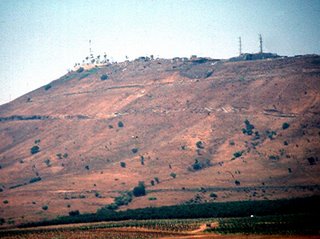 In recent weeks, the two Israeli services have produced conflicting assessments of current events in Syria. The chief of the Aman Research Department, the senior analytical officer in the intelligence community, assessed that Syria's Bashar Al-Asad was serious about resuming negotiations with Israel. Of course, the price for any agreement with Israeli will include the return of the occupied Golan Heights, seized by Israeli forces in 1967 and administratively annexed by Israel in 1981.
Although most Israeli politicians realize that if they ever want peace with Syria, they are going to have to return the land to Syria. Popular opinion in Israel, however, is overwhelmingly in favor of not returning the territory. I recently traveled through the Golan - Israel has built so much infrastructure that it will be difficult to return the area.
At the same time Aman's report was being briefed to the Knesset, the director of Mossad said almost the exact opposite - despite Al-Asad's public statements, the Syrian leader was not serious about returning to the negotiating table. Mossad's director believes the statements are merely for public consumption to deflect increasing world attention to Syrian designs on Lebanon and its close ties with Iran.
Israeli Prime Minister Ehud Olmert said that renewed talks with Syria would first require that Damascus stop allowing Iran to rearm and resupply Hizballah via Syrian territory, and stop support for Hamas, whose political leadership is headquartered in Damascus.
So, who does Olmert listen to?


