February 12, 2009

Syrian Air and the Israeli elections

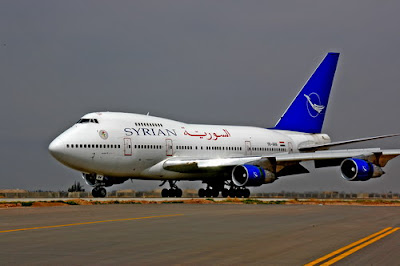
Syrian Air Boeing 747SP Syrian Air Boeing 747SP

What do Syrian Air*, the national airline of Syria, and Tuesday's elections in Israel have in common? More than you might think.

The U.S. government has given clearance to the Boeing corporation to overhaul Syrian Air's two Boeing 747SP aircraft, a reversal of the previous administration policy to isolate Syria. The Bush administration re-added Syria to the state sponsors of terrorism list in 2004 in response to Syria's complicity in allowing al-Qa'idah fighters to cross its borders into Syria. The two aircraft have been grounded for airworthiness issues for a year.

Syrian President Bashar al-Asad hopes the Obama administration will be more open to better relations with Damascus. The Syrian Air deal might be a small gesture on the part of the new American administration to signal its intention to improve relations and re-engage on the Syria track of the moribund Middle East peace process.

The deal comes at a good time for Syria. Not only are the two 747's inoperable, but a multibillion dollar deal with Airbus to acquire (a combination of purchase and lease) over 50 new aircraft had been held up by the previous administration - Airbus aircraft contain American components.

The approval of the Boeing contract coincides with an upcoming trip to Syria by two senior American politicians. Senator John Kerry, chairman of the Senate Foreign Relations Committee, and Congressman Howard Berman, chairman of the House Foreign Affairs Committee, will travel to Damascus to meet with President Asad. Unlike House Speaker Nancy Pelosi's misguided trip to Syria two years ago, this visit has the support of the White House. One must assume (and hope) that Kerry and Berman have been provided talking points by the administration.

A change of policy toward Syria is a good idea. The previous administration's efforts to isolate Syria failed. After Syria was forced to withdraw its forces from Lebanon in 2005 after being accused of complicity in the assassination of former Lebanese Prime Minister Rafiq al-Hariri, Damascus has been successful in recovering its influence in the region, mostly via continued support for Hizballah. AS an aside, I don't think the Syrians were "complicit," I think they outright did it.

Without Syrian support for Hizballah during its war with Israel in 2006, the group would have been destroyed. Now Hizbllah is arguably the key power broker in Lebanon - and it does the dabkah (national dance of Lebanon) to the sounds of a Syrian 'ud (lute).

It has also been reported that Fred Hof will be appointed as the new ambassador to Syria - and he will actually man hs post. Although we have had an ambassador to Syria since 1952 (except 1967-1974), the current ambassador has been in a "recalled to Washington" status since the Hariri assassination in 2005. Fred is a retired U.S. Army colonel with extensive experience in the region and is the right man to re-engage the Syrians.

So what does all this have to do with Israeli elections?

The results, with almost all the votes counted, point to a slight Kadima win, getting 28 seats. (See my article, Israeli Elections - And they're off....) Kadima is led by Foreign Minister Tzipi Livni. Likud, under former Prime Minister Benjamin "Bibi" Netanyahu, garnered just one less seat. Many observers - me included - believe that Mrs. Livni will find it difficult to forge a coalition. She needs 61 seats to form a government.

Benjamin Netanyahu and the author Benjamin Netanyahu and the author

Mr. Netanyahu may have a better chance of forming a coalition. If he does, he will emerge as the new prime minister of Israel. That would be a potential problem - to put it mildly - for President Obama's efforts to advance the Syrian track of the peace process.

Why? During one of his campaign appearances just prior to last Tuesday's election, the Likud leader said that if he became prime minister, he would oppose returning the occupied Golan Heights to Syria.

Return of the Golan Heights is the absolute minimum Syrian requirement for a peace agreement between Israel and Syria. An Israeli position that the return of the Heights is off the table effectively ends the Syrian track of the peace process. No matter what the Obama administration does, no matter how much better U.S.-Syrian relations become, it will never lead to success in ending the state of war between Syria and Israel.

In fact, the ascension of Netanyahu may push Syria to continue to seek advanced weaponry, conventional and other. Syria already has chemical weapons and the means to delivery them - both aircraft and missiles - virtually anywhere in Israel. Although their clandestine nuclear reactor in northeast Syria was destroyed by Israel in September 2007, Damascus may still seek a nuclear capability.

Most Israelis realize that the Heights are not, and have never been, part of Israel. The area has been occupied by Israel since it was seized by Israeli troops in the 1967 Six Day war. The area has been under Israeli administration - not annexation - for years. The arguments that the Golan Heights has strategic defense value no longer hold water. Syria does not need the plateau overlooking Lake Tiberias/Sea of Galilee (photo left)to strike those areas.

Israel does have a valid concern about the loss of its huge signals intelligence site (photo right) on the Golan Heights at Tal Abu Nada/Har Avital (depending on whose map and language you use). More importantly, the Golan Heights are the headwaters of the Jordan River, one of Israel's primary sources of water.

The juxtaposition and confluence of interests is astounding. The United States, or more correctly the Obama administration, wants to improve its relationship with Syria. It also has a commitment to its ally in the region, Israel, which has taken a stance that basically kills the peace process.

Interesting.

February 10, 2009

Israeli Elections - And they're off....

Tzipi LivniThe Israeli election results are in - surprisingly, the centrist Kadima Party led by Foreign Minister Tzipi Livni (left) emerged as the victor with a one-seat margin over rival Likud, led by Benjamin "Bibi" Netanyahu (below with author).

According to the Israeli press, Kadima won 28 seats and Likud received 27. As for the two other major parties, Avigdor Lieberman's Israel Beiteinu won 15 seats and Labor, led by Ehud Barak, received just 13 seats.

These results show an interesting trend in the Israeli body politic. Netanyahu was able to increase the conservative Likud's position by 15 seats, from 12 to 27. The far right Israel Beiteinu gained four seats, up to 15 from 11. The orthodox Shas party, normally associated with the conservative bloc, lost one seat, from 12 to 11.

On the other side of the spectrum, Labor was the biggest loser, giving up six seats. Kadima was pretty consistent, losing only one seat. Given those results, it would appear that Israelis have turned a bit to the right. However, due to Israel's complicated parliamentary system, the election results are only another step in the formation of a new Israeli government. The Knesset consists of 120 seats - to form a government a party or coalition of parties must control 61 seats.

Tzipi Livni will now have six weeks to form a coalition government. Whether or not she will succeed in putting together a coalition is uncertain. She failed to form a new government when Prime Minister Ehud Olmert resigned in September 2008. After the election results were announced this evening, she called on Netanyahu and his Likud Party to join her government. That would give her 55 seats, requiring only six more to form a government.

Bibi Netanyuah and the authorNetanyahu refused to concede, assuming that Livni will be unable to put together a coalition. He believes that he can, though, by appealing to the more conservative parties. It is probably safe to assume that Lieberman's ultra-right party will eventually throw their 15 seats to Netanyahu, giving him 42 seats.

Lieberman made a statement that he is open to either Kadima or Likud, but given his party's far right positions - they want to eliminate Hamas, for example - Likud is a better fit. His statement is an effort to give him more leverage in his negotiations with Netanyahu.

Since it does not appear likely that Netanyahu will join a coalition with Livni, it follows that the key to forming a coalition will be attracting Labor and Shas, or one of the two and a smattering of smaller parties.

It is dangerous to predict outcomes in Israeli politics - most analysts predicted a definite Likud/Netanyahu victory in today's elections. That said, it seems to me that Netanyahu might have the edge in forming a coalition.

February 9, 2009

Pakistan releases AQ Khan - how about some answers?

US State Dept photo Last week, the Islamabad High Court ordered the Pakistan government to release nuclear scientist Abdul Qadir Khan from house arrest. Khan was placed under house arrest in 2004 after he confessed to operating a nuclear weapons technology proliferation network - the so-called "AQ Khan network."
The in-home confinement was the extent of his punishment - he was pardoned almost immediately after his confession by then-President Pervez Musharraf. Khan confessed to transferring nuclear weapons technology from Pakistan to Libya, Iran and North Korea.

When Khan later denied providing technology to Iran and North Korea, American intelligence agencies requested the opportunity to question the scientist. All such requests have been denied. The Pakistani intelligence service, the Inter-Services Intelligence directorate (ISI) has provided only limited answers to question provided by the United States. It is doubtful that more answers are forthcoming to questions about exactly what the AQ Khan network provided to Iran and North Korea. Khan is regarded as a national hero in Pakistan.

US DOE photo

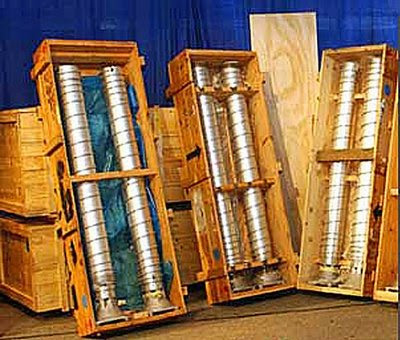
Centrifuges acquired by Libya via the AQ Khan network


North Korea has agreed to halt its nuclear weapons program, however, Iran remains a major concern for both the West and Israel. Iran has undertaken a major nuclear research and development program which it insists is for peaceful purposes and the generation of nuclear power.

Iran's stated program goals are almost laughable for a nation awash in oil and natural gas. Iran flares off more energy from its oil and gas wells than the potential power that could be generated if all of Iran's declared nuclear facilities were dedicated to the effort. The program has all the trappings of a nuclear weapons program. Given Iran's interest in long-range ballisitic missiles and its threats against Israel, most analysts have concluded the country is intent on developing nuclear weapons.

During my recent visit to Israel, Israeli intelligence analysts reiterated their concern over Iran's nuclear ambitions. They assess that Iran could have enough low-enriched uranium to further refine into weapons grade fissile material sufficient for one nuclear device by the end of this year.

The Israelis do not know if Iran possesses the capability to turn a device into a deliverable weapon. For that, they (and we) would like to have some answers from AQ Khan. Did he provide that type of information and technology to Iran? If they enrich enough fissile material for a weapon, do they already have a design? If there is a design, it is for a missile warhead or an air-delivered bomb?

Pakistan claims to be an ally of the United States. If AQ Khan did in fact violate Pakistani law, the ISI should provide answers to questions about what was provided to whom. That said, I will not hold my breath.

Yemen's unique counterterrorism tool

The government of Yemen released 170 men suspected of having ties to al-Qa'idah after the men signed pledges not to engage in terrorism.

Yes, you read that correctly. Sign a piece of paper that you will behave and you are set free. What an interesting method to root out terrorism in one of the most corrupt countries on the planet, and the new primary venue for al-Qa'idah's operations on the Arabian Peninsula.

Al-Qa'idah is on the rise in Yemen. This is not a secret - it has been announced by senior al-Qa'idah leaders. Al-Qa'idah members in Saudi Arabia were directed to relocate to Yemen because the security situation in Saudi Arabia has become too difficult for the group. Since 2003, after a series of al-Qa'idah attacks on residential compounds in Riyadh, the Saudis have aggressively hunted down al-Qa'idah members, killing many of them.

Memo to Yemeni President 'Ali 'Abdullah Salih: That is how you fight terrorists - hunt them down and kill them. You don't make them sign a piece of paper and let them go. You surely know the Arabic saying, "...hibr 'ala waraq" (just ink on paper). Is this how you plan to deal with the almost 100 Yemenis currently detained in Guantanamo that will likely be repatriated to your custody?

I also note in the news that the same Yemeni government that released 170 suspected terrorists has announced an upcoming offensive in the northern city of Marib, the epicenter of al-Qa'idah presence in the country. These announcements generally provide enough warning to the al-Qa'idah militants to allow them to seek refuge elsewhere until the Yemeni army rounds up a few of "the usual suspects," declares a major blow against terrorism and returns to its garrisons.

Yemen has a terrible record when it comes to keeping terrorists in custody. Perpetrators and suspects in the bombing of the USS Cole in which 17 American sailors were killed have been in and out - mostly out - of custody. Successful jailbreaks and escapes, while not commonplace, seem to occur with alarming frequency when suspected al-Qa'idah members are involved.

This recent release of suspects underscores my past concerns about, and objections to, returning Yemeni Guantanamo detainees to Yemen. (See my earlier article, Yemen and the Guantanamo 245) The Salih government is notoriously weak and corrupt. Once we repatriate the detainees, there is no guarantee they will remain in custody.

Perhaps they will sign a pledge not to be terrorists anymore.

February 8, 2009

Changing Power Paradigm in the Middle East

Professor Asher SusserDuring my recent trip to Israel, I had the opportunity to discuss the current political landscape of the Middle East with Professor Asher Susser, Senior Research Fellow at Tel Aviv University's Moshe Dayan Center for Middle East Studies. Susser is one of the more controversial political scientists in Israel today, but he has the uncanny ability to see it like it is.

Professor's Susser's assessment of the shifting series of alliances in the region is based on the changing paradigm of power brokers in region. According to Susser, none of the three main players in the region - considered by many as the "Arab world" - are Arabs. The three power brokers today no longer include Saudi Arabia and Egypt, but have shifted to Iran, Turkey and Israel.

Iran has emerged as the power broker in the Persian Gulf, almost wholly due to the defeat of Iraq and the removal of the Saddam Husayn regime. Israel continues to be a power player in the central Middle East, although its previous interlocutors Jordan and Egypt have larger lost influence at the expense of Turkey.

Turkey has a defense treaty with Israel and in the past has been an "ally of convenience," but since Israel's Operation Cast Lead in Gaza, Turkey has been uncharacteristically critical of Israel. Israel was particularly stung by the repeated verbal criticisms of its actions against Hamas by Turkish Prime Minister Recep Tayyip Erdogan. Turbulence in Israel's relationship with Turkey can cause problems on a variety of levels, not the least of which is the issue of Israel's concerns with Iran and its nuclear "research" (read: weapons) program.

The overarching current issue for Israel is its relations with the Palestinians, specifically the situation in Gaza. Of course, Israel's relations with the Palestinians goes back to at least the United Nations partition plan - UN General Assembly Resolution 181 of November 1947 - for the original two-state solution. The war that resulted from Israel's declaration of statehood on May 14, 1948 created a "file" of Palestinian refugees, the 1948 file. The Six Day War of 1967 created yet a second file of refugees.

One of the demands of many of the Palestinian rights and liberation groups is the "right of return" to their original homes, be they of the 1948 or 1967 file. Most Israeli politicians believe that the 1967 file can be addressed - many Israelis believe that reverting to the border as they were on June 4, 1967 border (or very close) is possible in a "land for peace" arrangement. That number has decreased since the Israelis withdrew from the Gaza Strip in 2005 and have been exposed to 8000 rocket and mortar attacks since. As for the "1948 file," it will be almost impossible to address their issues.

Exacerbating the conflict between Israelis and the Palestinians is the status of the Israeli Arabs. These are Arabs, both Muslims and Christians, who found themselves inside the borders of Israel after the War of Independence in 1948-1949. They are citizens of Israel, with all rights included - they have Israeli passports and serve in the Knesset. They are, however, exempt from Israel's mandatory military service.

Over the years, Israeli Arabs have gained political power via the ballot box - their population growth generally exceeds that of the Jewish Israelis - and have demanded that Israel no longer be called a "Jewish homeland." If current demographic trends continue, Israel could be an Arab country by the middle of this century.

After a few decades of wanting to have an agreement with the Palestinians, many Israelis are subscribing to the "no-solution solution." In other words, they are beginning to believe that there is no foreseeable solution and merely want to manage the conflict. Hopefully that involves a long-term ceasefire.

The main obstacles to a solution to the Palestinian issue? What do we do with the 1948 refugees, the "1948 file," and of course, what to we do with Jerusalem, holy to three religions?

Jerusalem remains an even thornier issue.

February 7, 2009

Israel's Anti-Terrorist Fence - Long Term Solution?

Anti-terrorist wall near Qalqiliyah

During my trip to Israel last month, I had the opportunity to spend an afternoon with Israel Defense Forces Major General (Reserve) Uzi Dayan and Israeli Air Force Lieutenant Colonel (Reserve) Danny Grossman.

Lt Col Danny Grossman, the author and Maj Gen Uzi Dayan

Uzi served as the national security advisor to former Prime Minister Arik Sharon and was one of the key proponents of Israel's controversial anti-terrorist fence. Danny has the unique distinction of flying the F-4 Phantom fighter jet in both the U.S. Air Force and the IAF. Uzi and Danny were kind enough to take me to, and through, the fence that separates Israel and the Palestinian West Bank. I took these photographs on both sides of the fence/wall.


Uzi wanted to make sure that I understood that the barrier is a security device, not a border. The barrier follows the approximate June 4, 1967 armistice line between Israel and what was then the Jordanian-administered West Bank. It does make some fairly deep incursions into the West Bank to extend protection to Israeli settlements on the West Bank. At several areas, the fence is actually a concrete wall to prevent Palestinians from firing small arms at Israeli motorists.

Google Earth view of wall/fence - red line is 1967 border

Closeup of wall near highway at Israel's narrowest point

There is no argument that the barrier has been successful in preventing terrorist attacks from the West Bank. According to the official Israeli government anti-terrorist fence website, suicide bombing attacks from the West Bank have dropped drastically to almost none. Even the leader of the Palestinian Islamic Jihad, Ramadan 'Abdallah Shalah, admitted that the security barrier has made "resistance" difficult.

Qalqiliyah gate (taken from from West Bank side)

It is possible to cross the security barrier - there is a crossing about every mile or so. Of course, you have to have authorization. Palestinians have very little chance of passing the Israeli army checkpoint to allow them into Israel. Israelis have a slightly better chance of entering the West Bank. We were able to pass through easily - most of the soldiers recognize Uzi as the former commander of the Central Command and the elite commando unit Sayaret Maktal.


Israeli military post above Qalqiliyah gate

Google Earth view of IDF camp and fence

Based on the Oslo Accords, there are three area designations in the West Bank. Area A is under Palestinian jurisdiction. The town of Qalqiliyah, shown in these photographs, is an Area A. Israeli forces can control who enters and leaves the town, but inside the town, the Palestinian Authority is in charge.

Qalqiliyah sits at the narrowest point of Israel - it is only 7.5 miles from the town to the Mediterranean. Area B is under joint Israeli-Palestinian jurisdiction, and Area C is under Israeli control. Area C contains the Israeli settlements on the West Bank.

IDF patrol on West Bank

The IDF was re-deployed to the area in the aftermath of the violoence in the so-called "al-Aqsa intifadhah" of 2000. They are still there, supporting the Palestinian Authority forces.

There has been a lot of criticism of the security barrier. It has been called a scar on the landscape, an eyesore, an insult to free movement, ugly. That said, it has been effective in lessening the violence directed against Israeli civilians.

The recent conflict between the Israelis and Hamas in Gaza has re-opened the debate about possible solutions on the Palestinian track of the peace process. Many believe there is no solution in the immediate future - the "no-solution solution" will include measures like the anti-security barrier. In the absence of a solution, just wall off the combatants and manage the conflict as best you can.


February 5, 2009

Iranian satellite launch - a wake up call

Iranian satellite launch - click for larger imageIranian TV coverage of satellite launch (click for larger image)

On February 3, Iran launched its first domestically-produced satellite into orbit on a Safir (Ambassador) launch vehicle. The launch was timed to coincide with the 30th anniversary of the Iranian revolution that brought Ayatollah Khomeini to power. Iran has at least one other satellite in orbit, but that was launched for them by the Russians.

The fact that Iran has a presence in space in and of itself is not alarming - it is the demonstration of the technologies required to put a satellite into orbit that is causing concern in the West, and for sure in Tel Aviv.

A two stage launch vehicle is basically an intermediate range ballistic missile without a guidance system. Instead of carrying a warhead that falls to earth, the launch vehicle carries a satellite into orbit. One can be used for the other. The U.S. Air Force has used decommissioned intercontinental ballistic missiles to place satellites in orbit.

This is reminiscent of the so-called Iraqi space launch program in 1989. Proud of their efforts, Iraqi engineers televised the first test launch. Prominently displayed on the control console in Arabic was the designator "Project 144/2." Of course, to most people that meant nothing. To U.S intelligence analysts, Project 144/2 was the Iraqi ballistic missile program. We surmised at the time that the space launch vehicle was nothing more than a long range missile project.

One of the failures of the Iraqi program was the inability to properly fire the second stage of the vehicle. Multistage rockets/missiles are required for longer ranges. The Iranians do not have this problem - they acquired much of the required technology from the North Koreans. Most of Iran's missile designs are copies of North Korean systems. The North Koreans have the know-how, and Iran has the money.

Not only is Iran intent of continuing its nuclear research program - which most analysts believe is leading to the development of a nuclear weapon - it seems committed to the development of longer range delivery systems that threaten Israel and beyond.

The Europeans are concerned about Iran's nuclear weapons program and the missile delivery systems being developed, and probably more likely to support the deployment of an American anti-ballistic missile system in Poland and the Czech Republic.

February 3, 2009

Iraqi elections - a step in the return to normalcy?

Iraqi ballot - click for larger imageIraqi ballot

The recent Iraqi elections, despite the low turnout, may have some good news for the long-term stability of the country. Unlike 2005, the Sunnis did not boycott the elections this time, turning out in large numbers to ensure they were not left out of the government. The decision to not have voting in the contested area of Kirkuk is a problem, but overall, the elections were completed in a relatively calm and orderly manner.

When all the votes are tallied, it appears that the winners will be the more secular parties and blocks, at the expense of the Islamic parties in both the Sunni and Shi'a communities. This is not surprising. The Iraqis, be they Arab, Kurd, Assyrian, Turkomen or Yazidis, have generally favored secular governments. Despite the brutality of the Ba'th regime under Saddam Husayn, the Iraqis supported the secular nature of the party, including women's rights, universal education and freedom of religion. It would appear that support of these ideals is on the rise.

The losers are the Islamic parties, particularly the Supreme Islamic Iraqi Council and the followers of radical cleric Muqtada al-Sadr. The Dawa' party of Prime Minister Nuri al-Maliki, despite being a Shi'a religious party, fared well since al-Maliki recast his image from being a Shi'a leader to being an Iraqi nationalist. His willingness to clamp down on Shi'a militias in Baghdad and al-Basrah gained him support among secular Iraqis, including the Sunnis who at one time feared a possible "Shi'a majority tyranny."

The low turnout - 51 percent - is a bit surprising. Analysts predicted a turnout of about 60 percent. There were some glitches as some potential voters were turned away from the polls because their names were not on the voter registers. Of course, these kinds of administrative issues are to be expected in a country which has virtually no experience with free and democratic elections. Similar errors occur in our elections as well. Florida and Minnesota come to mind....

According to journalist Leila Fadel, the Baghdad bureau chief for McClatchy Newspapers, Iraqi voters did not turn out in larger numbers because they feel "disenchantment with a democracy that, so far, has brought them very little."

Very little? The mere fact that they are having free elections might be considered something. How about freedom of speech, freedom of assembly, the right not to vote (under Saddam Husayn, voting - for him - was mandatory)? It reminds me of a demonstrator with sign in Baghdad shortly after the return to Iraqi sovereignty
that read, "Where is my freedom?" How ironic - the fact that he was able to stand there with the sign was his answer.

Iraqis voting for secular leaders is a good sign - maybe this is one step toward normalcy.

February 1, 2009

Hey Hamas - Do you want Netanyahu as prime minister?

Bomb-roof over a school near the Gaza StripBomb-roof over a school near the Gaza Strip (my photo)

Despite its self-declared January 20 ceasefire in the conflict with Israel, Hamas fired ten rockets and a barrage of mortar rounds into southern Israel on Sunday. Most of the mortar rounds and short-range home-made al-Qassam rockets impacted in Nahal Oz, a small kibbutz just inside Israel near the Gaza Strip.

One al-Qassam rocket landed near a kindergarten on a school day, but no one was hurt in that attack. However, two soldiers and a civilian were wounded by the mortar fire. A longer-range rocket, probably an Iranian-supplied Grad, landed in Ashkelon. Israeli aircraft later struck tunnels near Rafah on the Egyptian border and targets in the northern Gaza Strip.

At about the same time as Hamas militants were firing rockets at Israel, Hamas representatives were telling the Egyptians that they would agree to a 12-month ceasefire to begin later this week. Significant in the ceasefire proposal is a Hamas agreement that Mahmud 'Abbas's Palestinian Authority will control the Gaza border crossings with Egypt. This meets a key Israeli demand that Hamas not be in control of the crossings, and flies in the face of Hamas's ridiculous claims of victory in the conflict with Israel.

Also on Sunday, Khalid Mish'al, the Damascus-based political leader of Hamas, made a trip to Iran. Most of the money, weapons and training used by the fundamentalist group is provided by the Islamic Republic. During Mish'al's meeting with Supreme Leader Ayatollah Ali Khamenei, the Iranian leader congratulated Hamas on its "victory" in Gaza.

Benjamin Hamas, as well as Iran, is fully aware that Israeli elections are scheduled for February 10. When I was in Israel just ten days ago, the common belief was that the Likud party would win the election and Benjamin "Bibi" Netanyahu would emerge as the next prime minister.

The Kadima party, led by Foreign Minister Tzipi Livni, and the Labor party, led by Defense Minister Ehud Barak, do not have the votes to win the election. Labor has gained some support since the war in Gaza, but not enough to challenge either Likud or Kadima.

Netanyahu is regarded as the most hard line of the three. Every time Hamas violates the ceasefire and reinforces the belief among the Israeli electorate that Hamas has no interest in peace, it strengthens Netanyuahu's position - he has vowed to destroy Hamas. He also has gone on record stating that Iran will not be permitted to develop a nuclear weapon. "Iran will not be armed with a nuclear weapon," he said, "that is a fact."

Hamas (and Iran), if you want to ensure that the next prime minister is Bibi Netanyahu, keep on firing rockets into southern Israel. The Israelis will support his goal to eliminate you.

Obama and Iran - naïveté and the real world

President Barack ObamaSoon after becoming President, Barack Obama reiterated his campaign pledge to enter into negotiations with Iran to try to break the impasse over Iran's nuclear program. During the campaign, he indicated that he would talk with the Iranians without preconditions.

As with many of his initial positions - "don't ask, don't tell" and Guantanamo come to mind - reality has set in and there have been changes. Now the President is ready to begin diplomatic overtures to the Islamic Republic of Iran if Tehran is willing to "unclench its fist."

Words are taken very seriously in this part of the world, especially in Iran. Almost immediately following his remarks during an interview on the Arabic-language network al-'Arabiyah, the President received the predictable responses from the Iranians. It was as if the talking points were coordinated in Tehran - they probably were.

- Iranian President Mahmoud Ahmadinejad criticized the President's remarks as insufficient, demanding not only that the United States apologize for "crimes against Iran" over the last 60 years, but that Mr. Obama institute "deep and fundamental" changes in U.S. policy in the region. Of course, Ahmadinejad may have missed the point that Obama's willingness to talk to the Iranians is a rather significant change.

- In the spirit of piling on, Iran's vice president in charge of executive affairs, Ali Saidloo, reiterated Ahmadinejad's demand for an apology - evidently that is the new threshold for talks with the Iranians.

- This was followed by Iranian foreign minister, Manoucher Mottaki, who said that Obama's words are not enough, that there needed to be a practical demonstration of a change in American policies before the Islamic Republic will talk to the United States. He went further to warn the President that Iran's uranium enrichment program was not a topic for compromise.

- The official spokesman for the Iranian government, Gholam Hossein Elham, characterized Obama's willingness to talk to Iran as proof that American policy in the region had failed. He went on to claim that the new President realizes that he needs help from Iran to achieve American goals in the region.

- Former Iranian President Akbar Hashemi-Rafsanjani criticized Obama for continuing the Bush administration's policy of not specifically taking the military option off the table over Iran's refusal to halt its uranium nuclear enrichment program.

As I said, the responses were predictable. If you want to engage the Iranians in dialogue, it is not helpful to make accusations during an interview on a major Middle Eastern television network. The Iranians understand back-channel communications. The Obama administration should have used such channels to make the President's positions known to the Iranians. Once there was an agreement on a framework for dialogue, an announcement would be appropriate.

All President Obama can do now is make concessions, the exact wrong thing to do. While I am sure he views his actions as bold and strong, in the region this makes him look weak. In the Middle East, perception is reality.

I would advise the President to hire a good Middle East specialist who understands the region, as it is obvious he does not.