
The ceasefire between Israel and Hizballah defined in United Nations Security Council Resolution 1701 is just that, a cessation of combat operations. As of the night of August 14, the ceasefire seems to be holding, with only a few skirmishes between Israeli forces and Hizballah fighters. While that is good news, the ceasefire has solved none of the problems – it has merely deferred them.
After a few weeks, we will likely begin to see the deployment of the Lebanese Army and the expanded United Nations Interim Force in Lebanon (UNIFIL, they’ve been there in “interim” status since 1978). They have the mandate to replace Israeli forces in southern Lebanon. According to the resolution, the deployment of the international and Lebanese force will be “in parallel” with the withdrawal of Israeli troops. This will happen – Israel will be happy to leave southern Lebanon. Israel is not anxious to repeat their 18-year occupation of this area from 1982 to 2000 – and Hizballah will be glad to see them go. It’s what happens next that is important.
The resolution also calls for the area between the Litani River and the Blue Line (Israel-Lebanon border) to be “free of any armed personnel, assets and weapons other than those of the Government of Lebanon and of UNIFIL….” This will be particularly difficult. This passage is aimed at removing Hizballah elements from the south, especially the rocket launchers that were able to strike cities of northern Israel with over 4000 rockets. The problem with removing Hizballah equipment is that most of it was successfully hidden from the Israelis and the ineffective system of UNIFIL observation posts throughout southern Lebanon. I can’t imagine that the Lebanese Army or UNIFIL mounting any kind of serious effort to detect and remove it. As for Hizballah personnel, many of them are from this area. When you saw all the southern Lebanese villages in media coverage, you saw mainly women and children. Where were the men? They were off fighting the Israelis as part of Hizballah. Again, expecting the Lebanese Army and UNIFIL to remove them is just not realistic.
The resolution also calls for “no sales or supply of arms and related material to Lebanon except as authorized by its Government.” I believe that not only has there been a constantt flow (or attempts) of armaments and funds from Iran via Syria throughout the conflict, but that there will continue to be resupply effort. Unless there is some sort of new inspection regime that will be imposed at the borders, the weapons and money will continue to flow to Hizballah.
Arms to Hizballah? Under the 1989 Taif Accords and two resolutions – 1559 (2004) and 1680 (2006) – all armed groups should be disarmed. According to Hizballah Secretary General Hasan Nasrallah’s remarks of August 14, he is not willing to discuss disarmament of his organization at this time. I doubt that Nasrallah has any intention of ever disbanding Hizballah’s militia, unless, of course, Hizballah becomes the government of Lebanon.
The problems that existed at the start of the conflict still exist today. The two soldiers captured by Hizballah on July 12 are to be released unconditionally, but no time frame is specified in the resolution, and they are still in Hizballah custody. The Shaba’ Farms are still occupied by Israel, although I believe this is merely a contrived issue to justify Hizballah maintaining its militia.
The key to resolution of the continuing crisis is the disarming of Hizballah. I am not confident that the Lebanese Army or an expanded UNIFIL have the stomach for the task. I fear we will be having this exact conversation months or years from now.
August 14, 2006
UNSCR 1701 - Deferment of the Problem


August 11, 2006
British airliner terror plot: a Pakistani connection
(This originally appeared in MSNBC's Hardball "Hardblogger")
The British have taken over 20 persons into custody in connection with the plot to bomb nine airliners over the Atlantic while en route to cities in the United States.
Is this an al-Qaeda operation? Building nine explosive devices that can evade detection by airport security, then detonating them simultaneously on nine airliners is not the work of an "al-Qaeda wannabe." While there is no concrete evidence, most analysts believe that the sophistication of this plan and the level of training and support required points to al-Qaeda.
What is the connection to Pakistan?
Most, if not all, of the suspects are British subjects of Pakistani origin. It is believed that several of the suspects had recently traveled to Pakistan most likely for training, and money to support the operation was wired to some of the suspects from Pakistan.
That said, Pakistan has been a strong ally of the United States in the war on terrorism. It appears that the detection and unraveling of the plot was due to arrests made in Pakistan. Pakistani president Pervez Musharraf firmly supported American efforts to remove the Taliban from power in neighboring Afghanistan in 2001.
Musharraf has paid a price for his continued support of the United States, in the form of three known al-Qaeda efforts to assassinate him. Ironically, it was Musharraf’s intelligence service that originally created the Taliban, and there is still strong support for the Taliban and al-Qaeda in the Pakistani military and intelligence services. This bond has often been cited for the failure (or unwillingness) of Pakistani forces to capture or kill senior al-Qaeda and Taliban operatives known to be resident along the porous border with Afghanistan.
So is there a connection between this plot and Pakistan? There are areas of Pakistan that are virtually under the control of local tribes, in fact they are officially "tribally administered areas," including Waziristan and the Northwest Frontier Province on the border with Afghanistan. The central government rarely ventures into these areas. We believe that there are al-Qaeda and Taliban training camps in these areas - it is here we suspect that some of the July 7, 2005 London subway bombers were trained, where "American Taliban" John Walker Lindh received some of his training, and likely where some of these current plotters were trained.
When Musharraf has ordered the Pakistani army into these areas to hunt down Taliban or al-Qaeda fighters or camps, they have encountered fierce opposition. Musharraf has also refused to allow American forces operating opposite these areas in Afghanistan to enter Pakistani territory to hunt down suspected al-Qaeda and Taliban members.
Until the Pakistani army is ordered to take out these camps and either arrest or kill the remaining Taliban and al-Qaeda fighters, or Musharraf allows American forces to enter Pakistani territory to do it for him, I suspect there will be more plots like the one made public today.
MSNBC.com Articles - August 10
MSNBC.com - August 10
MSNBC Military Analyst Lt Col Rick Francona, USAF (Ret) contriubuted to these articles on MSNBC.com:

August 8, 2006
Lebanon-Israel: Shake-up in the IDF; France caves in
x
August 8
As the diplomatic efforts progress to reach a ceasefire agreement acceptable to all parties in the Middle East conflict, events this evening threaten to fan the flames of war rather than bring us closer to peace.
Yesterday, the Lebanese government offered to deploy 15,000 Lebanese army troops to the south, if Israel withdraws from Lebanese territory. (See my piece: Lebanon - Lebanese Army to Move South?) As I stated, this deployment is an attempt to blunt calls for a well-armed international force that would, among other tasks, oversee the disarming of Hizballah. This is a position anathema to Hizballah and its sponsors, Syria and Iran, and several factions of the Lebanese government.
Representatives of the Arab League met yesterday in Beirut to develop an alternate resolution than that proposed by the United States and France. Today, they presented their united position to the United Nations Security Council. They believe that the Lebanese army deployment, combined with an Israeli withdrawal from Lebanese territory, will negate any other United Nations or international force than that now present, the United Nations Interim Force in Lebanon (UNIFIL). UNIFIL has been "interim" since 1978 and has been ineffective since it was deployed. It has never stopped any Hizballah (or Israeli for that matter) military operation in the area.
It comes as no surprise that this afternoon, after listening to the Arab ministers, that France - nominally an ally of the United States - has reversed itself and has withdrawn support of the draft resolution that it had authored. The French ambassador now is calling for an immediate Israeli withdrawal and does not believe that in light of the promise of a Lebanese army deployment an additional international force is required. France has caved in and basically adopted the Arab League position.
Meanwhile, the military situation continues to intensify. The Israel Defense Force chief of staff, Lieutenant General Dan Halutz, has named his deputy, Major General Moshe Kaplinsky, as the overall coordinator for Israeli military operations in Lebanon. In essence, he has fired the chief of the IDF Northern Command, Major General Udi Adam. This comes just hours before the Knesset is to vote on additional reserve force callups and expansion of the ground campaign in Lebanon. There is a growing loss of confidence in how the IDF is conducting the ground war.
This comes at a time when the IDF is stepping up its attacks on the Lebanese coast between the Israeli border and Sidon, located about 30 miles south of Beirut. Although many of the Israeli naval, air and special forces attacks are focused on the Tyre area - about 15 miles north of the border and the location of many of the rocket attacks on northern Israel - Israeli helicopter gunships have also attacked what they claim are Hizballah targets inside the largest Palestinian refugee camp in the Middle East, the sprawling 'Ayn Al-Hilwah camp.
If we're heading towards a resolution, this seems like the long way to get there.
August 7, 2006
Lebanese Army to Move South?

What is driving these announcements? First, we need to look at the government of Lebanon. The government of Lebanon is fairly weak. It has a Christian president (Amil Lahud), a Sunni prime minister (Fu'ad Sinyawrah) and a Shi'a speaker of the parliament (Nabih Bary'). I would consider the president and speaker to be completely under the control of the Syrians. The prime minister, who is thought of very highly in most circles, is caught in the middle, as they say in Lebanon, bayn narayn - between two fires. Although initially he appeared to hold Hizballah responsible for the conflict, he has since changed his rhetoric and has praised the Hizballah chief Hasan Nasrallah for his leadership of the "resistance" to "Israeli aggression."
Now a look at the Lebanese armed forces. They have virtually no air force and navy, and the army is inadequate to extend Lebanese sovereignty to the entire country. This is obvious in the south. The army is organized into five regional commands, yet the Southern Region's most southern deployment is a token force in Tyre. According to senior American military officers, it would take two years of training to get them up to minimum proficiency. In its current state, it is no match for the highly motivated, disciplined and trained forces of Hizballah.
Why now the push to deploy the army to the south? The government, along with Hizballah and its Syrian and Iranian sponsors, do not want the deployment of a well-armed international force (as opposed to ineffective United Nations observers) into the region. Such a deployment will likely lead to the one thing Hizballah, Syria and Iran do not want - the disarming of Hizballah's militia. By deploying the Lebanese army to the region, Hizballah will be able to survive intact. There is no confidence among anyone that the Lebanese army will even try to disarm Hizballah.
I think this is all just rhetoric. Note that the announcement contained the phrase "when Israeli troops have withdrawn from Lebanese territory." In other words, they do not want to interpose themselves between Israeli forces and Hizballah, understandably so. The chance of Israeli forces withdrawing in the absence of either an international force, or possibly the Lebanese army, is slim to none.
Syria - armed forces on alert
As the United Nations works on a draft resolution to end the fighting Between Israel and Hizballah, Syria’s foreign minister Walid Mu’alim warned that Syria’s armed forces were under orders to respond to any Israeli attack.
Thus far in the conflict, Israel has gone to great lengths to keep it isolated to Lebanon. Although they believe that Syria has been active in resupplying Hizballah via the numerous small roads that cross the long, often porous border, Israel has refrained from striking any suspected resupply activity in Syria. Stopping the resupply efforts once the weapons are inside Lebanon is the reason the Israeli air force has been destroying many bridges and roads around the country, even outside the main battle space of the south.
What if the conflict spreads beyond Lebanon? Will a Hizballah rocket attack on Tel Aviv cause Israel to lash out? Where is the conflict likely to spread? The obvious answer is Syria. Hizballah is primarily supplied, funded and trained by Iran, with some Syrian weapons as well. Virtually all of Iranian support is funneled through Syria, mostly through the Damascus airport. (See Hezbollah and Hamas - the Iranian connection.) Should the conflict spill over into Syria and Bashar Al-Asad orders the Syrian military to respond, how will that affect the situation?
The Syrian military is no match for the Israel Defense Force (IDF). The IDF is superior in every aspect to Syrian forces. That is not to say the Syrians will not fight – they have an excellent reputation for standing and fighting despite heavy losses. Granted, having to do battle with Syria’s armed forces will divert the IDF’s primary focus from operations in Gaza and Lebanon, however, the IDF is capable of taking on Syria while keeping up the pressure elsewhere. In 1973, Israel has fought both Syria and Egypt simultaneously, and in 1967 took on Syria, Egypt and Jordan.
As I do my analysis for NBC/MSNBC, I try to forget a movie scene that keeps haunting me: “The Hunt for Red October,” Fred Dalton Thompson as Admiral Joshua Painter on the USS Enterprise, “This business will get out of control. It will get out of control and we'll be lucky to live through it.”
August 5, 2006
Hizballah's Zelzal Rocket - Target: Tel Aviv

Iran has supplied Hizballah with the Zelzal-2 (Earthquake) rocket system. On August 4, an Iranian government official admitted that his country had supplied the rocket system to Hizballah. Although it has been known since at least 2002 that the rockets had been supplied to Hizballah, Iran's admission did come as a surprise. What is not known is how much control Iran exercises over Hizballah's use of the rocket.
The Israelis believe that Hizballah had received as many as 100 of these rockets from Iran. Although Israel claims that they have destroyed 70 percent of the Zelzal-2 rockets, it is hard to know for sure. It is likely that Hizballah still has enough to cause substantial damage to Tel Aviv is they can successfully launch them. The problem is that with the size of the rocket and its TEL, and the hour or so it takes to set up the rocket for launch, Israeli surveillance systems can usually detect them before a launch.
Should Hizballah be successful in firing a Zelzal-2 into Tel Aviv, that would represent a major escalation of the conflict and may cause the fight to expand beyond the borders of Israel and Lebanon.
Hizballah's Kkaybar-1 Rocket (Update)
On July 28, Hizballah launched at least four rockets into Israel, landing in an area near the northern town of Afula. According to the claims made by Hizballah on its Al-Manar television station, the rocket was the Khaybar-1. Based on Israel Defense Force analysis of the wreckage, the rockets were in fact the Iranian-made Fajr 5.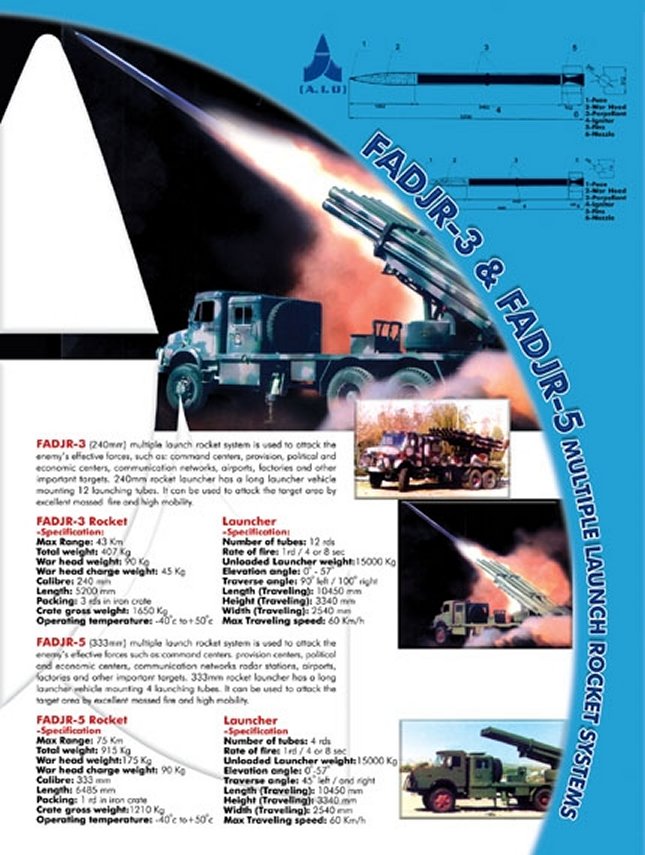

Although Israel has developed the Arrow anti-ballistic missile system and has the Patriot air defense system, the relatively flat trajectory of these rockets* is not in the engagement envelope of either system. Israeli air strikes have attempted to suppress Hizballah's ability to launch rockets, but they have not been able to prevent repeated multiple launches every day.
__________
* A rocket is unguided; a missile has an on-board guidance system.
August 2, 2006
IDF Changes Tactics – Finally
Last night, as the self-imposed hiatus on Israeli air force major air operations in Lebanon expired, Israel Defense Force (IDF) special operations soldiers launched a raid in the city of Ba’labakk, 80 miles inside Lebanon in the northern Biqa’ Valley and less than 10 miles from the Syrian border. The target was the Dar Al-Hikmah hospital where it was believed senior Hizballah leaders were located. Israeli forces, flown in and out by helicopter with fighter aircraft support, all returned safely.
At the same time, the Israeli air force struck targets to continue the isolation of Lebanon from Syria. While this effort has had some success, Israeli officials believe Syria continues to try to resupply Hizballah. Last night’s strikes focused on the Al-Hirmil area – near the main road between the Biqa’ Valley and the Syrian industrial city of Homs 40 miles away. This would be an alternate supply route to the Beirut-Damascus highway that has been the subject of numerous Israeli air strikes.
It appears that the debate inside the IDF has been resolved in favor of expanded ground operations – Israel’s national security cabinet authorized just that yesterday. Today we saw about six combat brigades enter southern Lebanon, attacking along the border area as they begin the move towards the Litani River, about 18 miles north. In the east near Qiryat Shemona, Israeli forces are attacking along the border and moving towards the strategic town of Marj ‘Ayun, sitting at the southern end of the Biqa’ Valley, able to control that potential Hizballah resupply route.
No longer is the IDF mounting raids into Lebanon and withdrawing, as they did earlier at Marun Ar-Ra's and Bint Jubayl. It is moving into southern Lebanon and will occupy it until the international force arrives. Finally.
August 1, 2006
Strange Bedfellows
In the next few days, it is expected that the Israel Defense Force will move across the Lebanese border in force and move to the Litani River (about 20 miles north of the border), hoping to consolidate positions prior to the introduction of an international force.
Senior Israeli officials speaking privately tell me they believe they have tacit approval from Saudi Arabia, Egypt and Jordan to conduct these operations without fear of a military reaction. That leaves Syria as the lone Arab "confrontation state" that opposes the Israeli move.
Yesterday Syrian president Bashar Al-Asad raised the readiness rate of his armed forces. The Israelis believe that some Syrian units have begun moving out of garrison - the Israelis have excellent surveillance and reconnaissance capabilities in southern Syria where the bulk of the Syrian armed forces are deployed. It would be interesting to know the status of Syria's SS-21 and Scud-C ballistic missile units. In any case, the Syrian forces are no match for the Israelis.
Also in the "strange bedfellows" department, the Iranian foreign minister flew to Damascus for meetings with his Syrian counterpart - that itself is not strange. He also went to Beirut to meet with his Lebanese counterpart - also not strange. After all, Iran is Hizballah's primary sponsor. Almost all of Hizballah's money, weapons and training originates in Iran, delivered via Syria.
What is strange is the presence of the French foreign minister in Beirut and the meeting between the French and Iranian ministers. I assume they were discussing Hizballah's terms to accept an international force. Syria, another patron of Hizballah, has already stated that an international force will be treated as "occupiers."


