April 21, 2010

Unemployed Saudi youth - a time bomb

The Saudi government released new unemployment figures for the Kingdom - the numbers represent a disturbing trend that must, and should, have the royal family worried. Unemployment in a monarchy often leads to civil unrest.

Overall unemployment in the Kingdom - among Saudis, not the large number of foreigners who work in the country - is over 10 percent, a slight rise from a year earlier. While that is bad enough, the unemployment number for the 20-24 age group was well over 40 percent. The numbers for the 25-29 age group were not much better.

This high unemployment among young Saudis, many of whom have been trained at the finest schools, colleges and universities in the United States and Europe, is a potential ticking time bomb for the House of Sa'ud (the royal family). These young Saudis have earned degrees and received advanced training, hoping to return home to a good job in one of the world's wealthiest countries, only to find that most of the jobs to which they aspire are filled by foreigners or Saudis with influence with the ruling family.

Foreign workers, who work in all sectors of the economy from senior executive positions to the most menial labor, make up about one third of the total population of the country, which is just over 25 million people. While some of the more specialized skills are unique to the foreign workers, many of the jobs could be done by Saudis, especially those with Western training.

Over the last 20 years, there has been an program to "Saudi-ize" many managerial and technical jobs, replacing foreign workers with educated Saudis. Many employers are reluctant to hire the Saudis, as the young Saudis are perceived to be not as capable as the foreigners and too demanding of high salaries and perks.

Today's unemployment numbers are just the tip of the iceberg of the problems facing the House of Sa'ud. Half of the rapidly growing Saudi population is less than 20 years old - 40 percent are under 15. As these young people reach employment age, the government will be challenged to create the conditions for meaningful employment opportunities.

The king - or the Saudi government, it's the same thing - needs to be sensitive to this issue. If the day-to-day aspirations, and that includes access to the political system as well as jobs, of the upcoming generations are not addressed, these youth will be the nexus of unrest. They will be ripe for another calling - it is not coincidence that one of the most powerful Islamist movements is named al-Dawa' (the call).

King 'Abdullah and his brothers ignore the young, educated - and unemployed - Saudis at their peril. These disaffected youth could be their downfall.

April 20, 2010

Three Al-Qa'idah in Iraq leaders dead - now what?

The late Abu Ayyub al-Masri

In the last few days, American and Iraqi forces have killed three leaders of al-qa'idah fi bilad al-rafidayn - al-Qa'idah in the land of the two rivers (Mesopotamia), more commonly referred to as al-Qa'idah in Iraq, AQI. The leader of AQI Abu Ayub al-Masri and the so-called "emir" of the al-Qa'idah affiliated Islamic State of Iraq Abu 'Umar al-Baghdadi were killed in Sunday near Tikrit, and soon thereafter the leader of AQI operations in the northern provinces Ahmad al-'Ubaydi was killed near Mosul.

This is welcome news, but what does it mean for the continuing Islamist insurgency in Iraq?

For a short period of time, it will cause disruption in the organization - any organization would be affected. However, AQI and its affiliated Sunni groups are made up of small cells that function fairly autonomously and unfortunately, show excellent leadership skills and flexibility. New leaders will emerge to replace the three dead insurgents. The good news is that in most cases - and we have seen this throughout al-Qa'idah over the years - the new leaders are not as capable as the leaders they replace.

It is interesting to note that al-Masri and al-Baghdadi were tracked down and killed near Tikrit, still a hot bed of Sunni insurgency. Signs like this one (left) can still be found in the area. When this photograph was initially reported by the Associated Press, the caption called it a "vandalized" image of Saddam Husayn. However, if you ask someone who can read spray-painted Arabic (I can), it actually reads, "Long live Saddam and the Ba'th [Party]."

Overall, American and Iraqi intelligence and military forces have almost destroyed AQI, thanks to the efforts associated with the surge of late 2007 and the decision on the part of Sunni tribal leaders in al-Anbar governorate to side with Baghdad against the Islamists - that became known as the Anbar Awakening.

At the same time, Shi'a groups saw the handwriting on the wall and decided not to take on the larger number of American forces in the country. They have mostly shifted their efforts to the political arena - that's another issue. According to the commanding general of U.S. forces in Iraq, despite some high profile attacks in Baghdad, violence in the country is at its lowest levels since the American invasion in 2003.

Al-Qa'idah in Iraq is still a threat, but a much diminished one. In addition to the recent high-profile successes, Iraqi forces are taking down rank and file members of the group every day. The group's operations are now limited to the areas north of Baghdad and near Mosul.

Continued pressure by the Iraqis, with help from the United States as needed, is necessary to eliminate the threat. The Iraqi government is on the right track - they no longer want to talk to al-Qa'idah members. They are hunting them down one by one and killing them.

April 18, 2010

Gates gets it - the others, not so much....

According to recent news reports, in January Secretary of Defense Bob Gates sent a memo to National Security Advisor retired General James Jones warning that the United States was ill-prepared for dealing with Iran's nuclear ambitions. Gates's assessment is based on the assumptions that the Obama administration's outreach effort to Tehran has failed (it has) and that sanctions, even if applied (not likely), will not be successful (doubtful).


Click for larger imageThe Obama Administration "Brain Trust" - the President, General Jones, Chairman of the Joint Chiefs of Staff Admiral Mike Mullen, Secretary Gates and Secretary of State Hillary Clinton. As I said in the title, Gates gets it - the others, not so much....

The fact that Gates had to write this memo to the National Security Advisor is troubling. From my conversations with military and civilian officials at the Pentagon, there is concern that this Administration does not fully realize the magnitude of the Iranian nuclear issue, including the ramifications beyond our shores of a nuclear-armed Iran, specifically to our allies in the Middle East. normally that means just Israel, but in the case of Iran, also includes the Arab states of the Persian Gulf.

Surprisingly, even the Chairman of the Joint Chiefs of Staff, Admiral Mike Mullen, does not seen to appreciate the consequences of an Iran with a nuclear arsenal. His comments indicate a reluctance to advise the President on the use of effective use of military force - that's his job, by the way. Mullen's remarks that a military strike would be counterproductive send the wrong message to Tehran. Although he has stated that the Department of Defense has contingency plans, most people I have talked to regard these plans as outdated and not to be taken seriously.

Secretary Gates, on the other hand, appears to see the situation with Iran as a likely diplomatic failure that just might require some action by American armed forces. Those actions run the gamut from the recent increase in the deployment of Patriot anti-ballistic missile defense systems to our Gulf allies, an increased maritime presence in the Gulf, more naval patrols off the Straits of Hormuz, forward basing of strategic aircraft, etc., to the actual employment of force. The Pentagon, thanks to Gates and the January memo, is now developing realistic options. We also need to make sure that the Iranians are made aware that there are realistic military options.

No matter the options available, it will still require the President to determine what actions are to be taken. The Administration has said repeatedly that Iran will not be allowed to become a nuclear state, but American officials have never said what they are prepared to do to prevent that from happening. General Jones is on record as saying that the administration has a plan that "anticipates the full range of contingencies."

I am not sure either the President or Jones gets it. The Obama diplomacy has failed. The three sanctions protocols levied by the United Nations along with the unilateral U.S. sanctions have not modified Iran's behavior in the slightest. The prospects for Secretary Clinton's "crippling" sanctions are extremely dim. The Obama deadline of an Iranian response to the issue - the end of 2009 - has come and gone with no consequences.

The most telling statement thus far this year was a government spokesman claiming that the United States would ensure that Iran does not “acquire a nuclear capability...that includes the ability to have a breakout.” A breakout refers to the tactic of acquiring all the capabilities to make a weapon, then renouncing the Non-Proliferation Treaty and declaring itself a nuclear power - think North Korea. Our failure to respond meaningfully to that action was heard loud and clear in Tehran.

Iran may be positioning itself for just such a breakout. I do not think that anything that happens in Syria and Lebanon is not scripted in Tehran. There was a report last week that Syria had provided Scud missiles to Hizballah -why they need Scuds is puzzling, but may be part of the Iranian attempt at deterring the Israelis from a strike on Iran's nuclear facilities.

Gates has told the White House the United States needs to be thinking about the full range of foreign policy tools. That goes beyond the failed diplomatic outreach and sanctions. Time is running out.


April 17, 2010

Off to the races - Saudi Arabia to develop nuclear energy

It was only a matter of time.

Once the Iranians began their "peaceful" nuclear research and development program, it was inevitable that soon thereafter other countries in the region would also start some sort of nuclear program as well. No one in their right mind still believes that Iran is not developing a nuclear weapon. That fact is obvious to regional powers - the Saudis, Egyptians and Turks at the minimum. They as well as all the Arab states of the Persian Gulf view Iran's acquisition of a nuclear arsenal and associated delivery systems as a threat.

Saudi CSS-2 Missile Capability - click for larger imageWhen faced with a threat, most countries react to try and mitigate the threat. Normally Saudi Arabia would just purchase any capability they want. I remember when I deployed to Riyadh during Operation Desert Shield in 1990 the Saudis looking at all of our various systems and asking, "Who makes that, how much is it, and when can we take delivery?" We were very concerned when they demonstrated this trait with the acquisition of the CSS-2 medium-range ballistic missile system from the Chinese - the missile was designed to carry a nuclear warhead well in excess of 1,500 miles.

The Saudis just announced that they will begin construction of the King 'Abdullah City for Nuclear and Renewable Energies, to be built in Riyadh. The purpose of the center will be to conduct research into nuclear and alternative energy sources to "diversify the kingdom's power generation away from oil and natural gas."

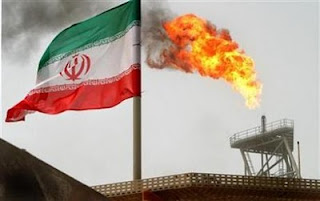
Where have we heard that before? HINT: Tehran. We are still hearing it from Iranian President Mahmoud Ahmadinejad as he insists that his country is only seeking to develop an electical power generation capability. What he doesn't say is that if all of the nuclear facilities in the country were used to generate power, they would still generate less power than the nation's oil wells flare off as waste. The power generation argument just does not make sense.

Saudi Arabia is looking across the Persian Gulf at what is likely the world's next nuclear-armed nation. The Saudis, long-time American allies, are unsure of the direction of American foreign policy in the region and probably think they may need something to counter Iran's accession as a regional power. A Saudi nuclear energy research and development center is the logical answer - after all, that's how Iran's program got started.

American intelligence analysts for years have suspected that Saudi Arabia was interested in a nuclear weapons capability. This may well be the start of the world's next arms race.

Does anyone really take Iran's claims seriously?

Not to be outdone by the recent U.S.-hosted nuclear summit, Iran convened its own disarmament forum in Tehran last week. Not surprisingly, most of the rhetoric emanating from Tehran was directed at the United States - Supreme Leader Ali Khamenei went so far as to brand America as an "atomic criminal."

Does anyone really take these guys seriously?

Well, they should. No, not the meaningless drivel that spews from the mouths of President Mahmoud Ahmadinejad or the Supreme Leader, but their actions. The Iranians, despite their claims to the contrary, are intent on developing a nuclear weapons capability. That means not just a nuclear weapon, be it a warhead, bomb or other explosive device, but also the means to deliver it. While they are feverishly enriching uranium to develop the fissile material that is essential to a nuclear weapon, they are also deeply involved in the research and development, or the acquisition from foreign suppliers, of ballistic missile systems. They can already strike anywhere in the Middle East - including American military facilities and the nation of Israel - and will soon have the capability to place much of Europe at risk.

The hard part, the critical part, of this effort is the development of the fissile material - in the case of the Iranians it appears to be highly enriched uranium. Once they have the fissile material - and they do not appear to be too far from that goal - the rest of the process is markedly easier. Much of the know-how and technology is readily available, and I would assess that the Iranians already have it.

Iran seems to possess all the elements of a successful nuclear weapons program - the qualified engineers and technicians, almost unlimited resources from high oil prices, and most importantly, the political will to make it happen despite the hand-wringing and ineffective objections of the rest of the world. Add to that Tehran's rather successful foreign policy initiatives over the last few years. Despite an overwhelming outcry from the nations of the world, the United Nations has not been able to impose effective sanctions, mainly because the Iranians have been able to convince the Chinese and Russians to ensure international efforts against the country are too weak to slow them down.

Although President Barack Obama and his Secretary of State Hillary Clinton would have you believe that Russia and China are going to support "crippling" sanctions against Iran, China has only agreed to attend a meeting on the subject and Russia is still providing weapons, and will initiate operations at the Russian-provided Bushehr nuclear reactor in the near future. The President wanted sanctions to start "in weeks, not months" - that is just not going to happen.

While the Americans and their European allies are floundering in any actions against Tehran, the Iranians have successfully lobbied the Turks and Brazilians to vocally oppose sanctions as well. Add that to Chinese and Russian reticence over meaningful action against Iran, and it's hard to see how this impasse will resolve itself peacefully. At some point, the United States is going to have to get off the fence and decide whether it will allow Iran to develop nuclear weapons or not.

Tehran seems to have outmaneuvered the West again. We better take them seriously.

April 14, 2010

Scuds for Hizballah - a game changer

According to senior Israeli officials, including President Shimon Peres, Syria has provided Scud missiles to Hizballah in Lebanon. If true, this represents a major change in the military situation in the region and provides Hizballah with the capability to strike targets virtually anywhere in Israel. During the 2006 war between Israel and Hizballah, the militia was only able to fire rockets south of Haifa but not as far as Tel Aviv.
I am surprised that Syria would consider the transfer of the Scud missile system to Hizballah. Maintaining and operating the Scud, be it the original Soviet/Russian version or the reverse-engineered North Korean version (Syria has both types), is not something done by amateurs - it requires a certain amount of training and a fair amount of logistics support. The Scud is a liquid-fueled missile - handling of liquid fuel is hazardous for even trained personnel. Transfer of this system to Hizballah would have required extensive training in either Syria or Iran.

If in fact Hizballah is now in possession of the Scud, the Israelis should be able to detect it. Israeli reconnaissance flights - manned and unmanned - operate over Lebanon daily. Movement of Scud system components will be spotted. Perhaps the Israelis already have intelligence imagery showing the presence of the Scuds in Lebanon. I for one would like to see that before I truly believe this reporting.

Provision of the Scuds to Hizballah would signal a major shift in Syrian - and likely Iranian - policy toward Lebanon and its proxy force there. It is one thing to provide Katyusha and Fajr rockets to Hizballah - these give the group the ability to hit targets in northern Israel. That's bad enough, but providing the group with the ability to strike Tel Aviv or even Jerusalem significantly ups the ante. An attack on either Tel Aviv or Jerusalem would undoubtedly trigger an overwhelming Israeli response against Hizballah targets in Lebanon and possibly even military targets in Syria itself.

Why would Syrian President Bashar al-Asad take this step? The timing is interesting. The Obama Administration has just named an ambassador to Damascus to fill the post that has been vacant since Syria was accused of complicity in (or actually conducting) the 2005 assassination of former Lebanese Prime Minister Rafiq al-Hariri in Beirut. Despite Israeli Prime Minister Benjamin Netanyahu's bellicose rhetoric, there were some indications that Syria and Israel might be able to resume talks on the peace process. President Obama has made the Syria-Israel track an issue his administration would like to resolve.

Sending Scuds to Hizballah is probably not a wise decision for the Syrians. It changes the equation too radically. Years ago when the Syrians introduced the SA-8 air defense missile system into Lebanon, the Israels conducted preemptive strikes forcing the Syrians to remove the systems.

Introduction of the Scud surface-to-surface missile represents a serious threat to Israel. It goes beyond a deterrent - it will actually trigger the action it is supposed to prevent. If they are present in Lebanon, expect Israeli military strikes against them.

April 7, 2010

Al-Qa'idah in the Arabian Peninsula feeling the heat?

AQAP leader Anwar al-'Awlaqi (left)

According to a Yemeni newspaper, Al-Qa'idah in the Arabian Peninsula (AQAP) has moved its military operations from Yemen to Somalia, at least temporarily. If true, this indicates that the recent Yemeni crackdown - with American intelligence and occasionally weapons support - has been effective. If true, this represents a victory in the American war on terrorism, or the "overseas contingency operation" against "man-caused disasters, or whatever the Obama crowd is calling it these days.

This success is in stark contrast to the Obama policy of continuing to pour American combat forces into Afghanistan to, as he put it only 10 days ago, "to disrupt and dismantle, defeat and destroy al-Qa'idah...." As I have consistently reminded the President, al-Qa'idah has virtually quit Afghanistan, they are under great pressure in Pakistan (thanks to the Obama drone-attack policy), they have largely been defeated in Iraq despite increased violence there, and they have been almost eliminated in Saudi Arabia. The remnants had gathered in Yemen, then combined with the survivors from the Saudi crackdown to form AQAP. Now it would appear that they have had to take refuge in probably one of the last remaining lawless sanctuaries - Somalia.

There are indications that the United States is working with the weak Somali government to assist them in confronting the increased threat from al-Qa'idah. Again, if true, this is a good step. This is how we should be conducting the war against al-Qa'idah - hunt them down and kill them wherever they are. As I have said, it is not in Afghanistan.

Let's hope the Yemeni press account is true. Al-Qa'idah on the run is a good thing. More American troops in Afghanistan - especially given Afghan President Hamid Karzai's latest remarks - is not.

April 6, 2010

President Obama and sanctions on Iran

In a recent statement, President Barack Obama said, "I'm not interested in waiting months for a sanctions regime to be in place, I'm interested in seeing that regime in place in weeks."

Unfortunately, that does not seem likely. Despite the President's upbeat rhetoric and cheerleading from his Secretary of State, there does not appear to be consensus among the five permanent members of the United Nations Security Council for another round of sanctions against Iran. The three previous rounds have proven to be ineffective, and given Russian and Chinese reticence on anything remotely punitive against Tehran, it is doubtful that another watered-down protocol will have any greater effect.

The Security Council did not put the Iranian nuclear program on its April agenda, so the President's wish for action in weeks appears overly optimistic. Russia just a few days ago restated its position that additional talks with Iran are the best hope for resolution of the nuclear issue - that hardly sounds like they are on board, as Secretary Clinton would have us believe.

China has agreed to attend a meeting on the issue - that is not a commitment to support sanctions, merely to meet. China prefers the diplomatic approach to Iran, although that also has produced no results. Of course, "no results" to us may in fact be just the result the Chinese prefer - remember that China gets over 10 percent of its oil from Iran. The meeting has yet to be scheduled.

There is little patience in the President's own party to wait for yet more ineffective United Nations sanctions. Senator Chuck Shumer urged the President to "hit Iran first, on our own, with unilateral sanctions." What makes him think additional American sanctions will be any more effective than the existing U.S. and UN measures? We have very little economic leverage left - sanctions will not work.

The Iranians know that sanctions against the world's fourth largest oil producer are not likely to work. The rest of the world seems to know that as well - Iran and an Iranian-Australian consortium with Chinese financing are working on a contract to develop three oil fields in Iran.

Mr. President, one of your favorite phrases is, "Let me be clear." Okay, here's a real opportunity. Either you are serious about preventing Iran from acquiring a nuclear weapons capability, or you are not. What is it, Mr President?

After you answer that, continue to be clear. Diplomacy and your outreach has failed, unilateral American and three rounds of United Nations sanctions have failed, the chances for additional multilateral sanctions appear dubious, and there is not much more American sanctions can achieve. So just what are you prepared to do about Iran?

As with many of your foreign policy efforts, I think I know the answer - nothing. Why not be clear and just say so.

April 1, 2010

Kerry in Syria - are you really that naive?

Syrian President Bashar al-Asad and Senator John Kerry


Over the past few months, President Barack Obama has attempted to engage Syria and improve America's relations with the country. Obama has appointed an ambassador to fill the post which has been vacant since 2005 when Syria was suspected (rightly, in my opinion) of complicity in the assassination of former Lebanese Prime Minister Rafqi al-Hariri in Beirut. I applaud the Administration's efforts to try and break Iran's diplomatic hold on Syria - that will be critical to a comprehensive peace in the Middle East (see my earlier article, Obama to "engage" Syria - why not?).

Unfortunately, John Kerry has decided to insert himself into the process. I hope he was not sent by the White House, but is merely attempting to make himself relevant in American politics. If the President did in fact dispatch Kerry to Damascus and is relying on the senator for advice about the Middle East, we are in trouble.

Let's look at the Senator's words, beyond the obvious, "Syria is an essential player in bringing peace and stability to the region."

Here's a Kerry classic: "Both the United States and Syria have a very deep interest in having a very frank exchange on any differences (and) agreements that we have about the possibilities of peace in this region."

Huh?

"There are things that the United States can do, there are things that Syria can do, there are things that Israel can do, Turkey can do, some are unilateral, some are multilateral. But all of us have to work together in order to seize real opportunities.

"We also remain deeply concerned about the flow of weapons in this area, through this area, to Hezbollah. That is something that must stop in order to promote regional stability and security."

This is not rocket science. If there is to be peace between Syria and Israel, Israel must return the Golan Heights which it has occupied since seizing the area in the Six Day War of 1967. For its part, Syria will have to stop the Iranian resupply flights into Damascus that are Hizballah's primary source of weapons used to threaten northern Israel.

How about just publicly demand those two things: Israel, commit to return the Golan. Syria, agree to stop Iranian resupply of Hizballah? It doesn't take an hours-long meeting at the Qasr al-Sha'ab that creates a bunch of words that mean nothing - I refer to your "Kerry classic" above.

Do you really think that you accomplish anything on these trips? Having served at the U.S. Embassy in Damascus, I can tell you the answer is no.

Saudi Arabia - What century are we in here?

THIS IS NOT AN APRIL FOOL'S JOKE


Saudi Arabia has sentenced a Lebanese television personality to be beheaded for practicing sorcery - yes, alternately described by the Saudis as "witchcraft" and "black magic." The November ruling has just been upheld by the original court.. The verdict must also be upheld by the Supreme Court and then ratified by King 'Abdullah.

There is precedent for this - in 2007, the Saudis beheaded an Egyptian man on the same charge. Arrests for sorcery are up in the Kingdom - there is a campaign among the religious police (mutawa', volunteers of the Committee to Prevent Vice and Promote Virtue) to stamp out the practice.

The Lebanese man, 'Ali Husayn Sibat, is not accused of practicing sorcery in the Kingdom, but on his television show which originates in Beirut. He was recognized while on a religious pilgrimage in the holy city of Medina and turned into the religious police. He was tried and convicted in short order.

Amnesty International claims that Sibat is being punished for exercising his "right" to freedom of speech. Memo to Amnesty International: There is no freedom of speech in Saudi Arabia.

Saudi Arabia executes (beheads) persons accused of rape, murder, armed robbery and drug trafficking, as well as the additional crimes against Islam, apostasy and sorcery. I understand the severe punishments for the four crimes, but apostasy and sorcery? What century are we living in?

I ask that question rhetorically. Those of us who have lived in "the magic kingdom" know the answer....